
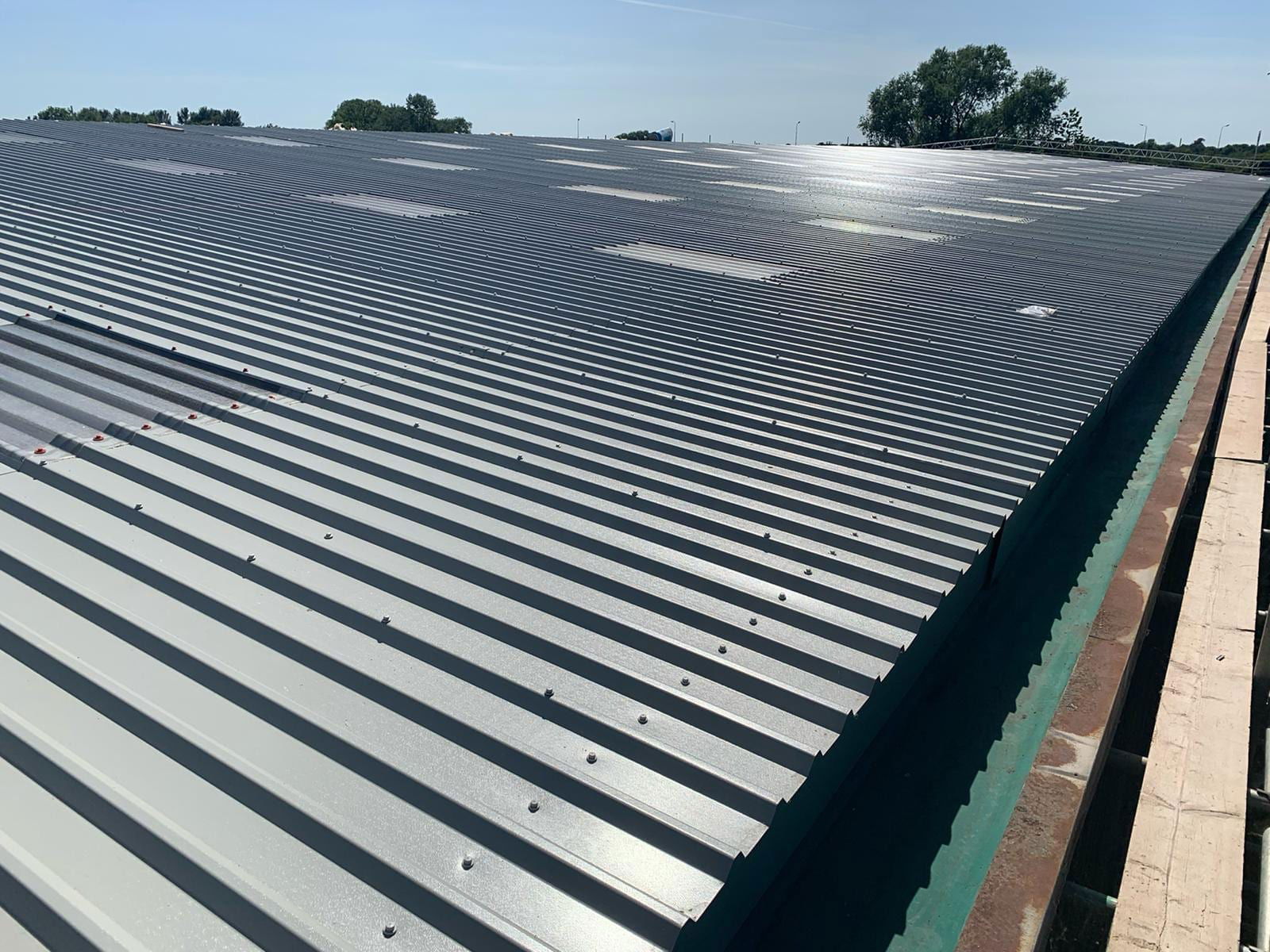
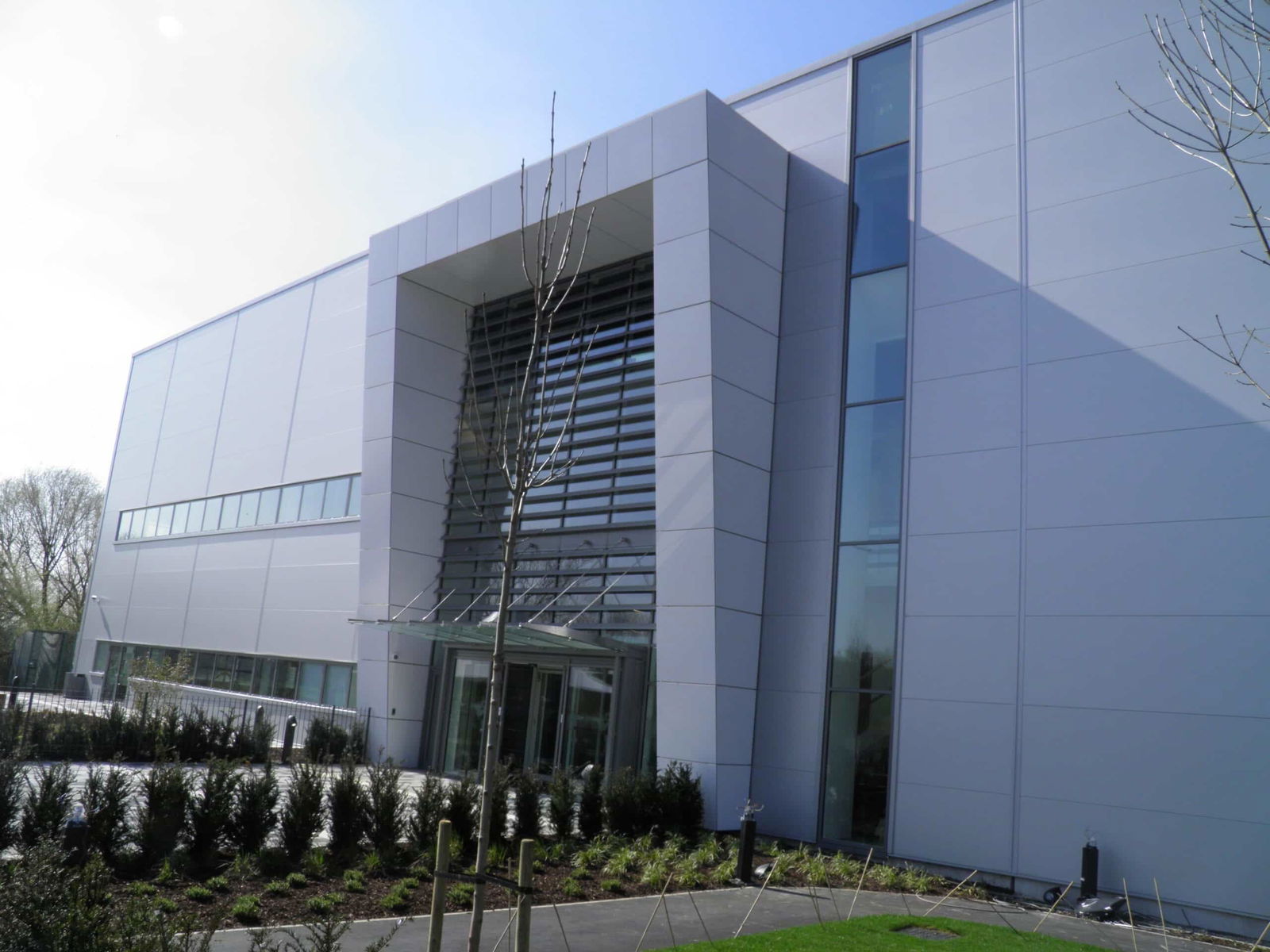
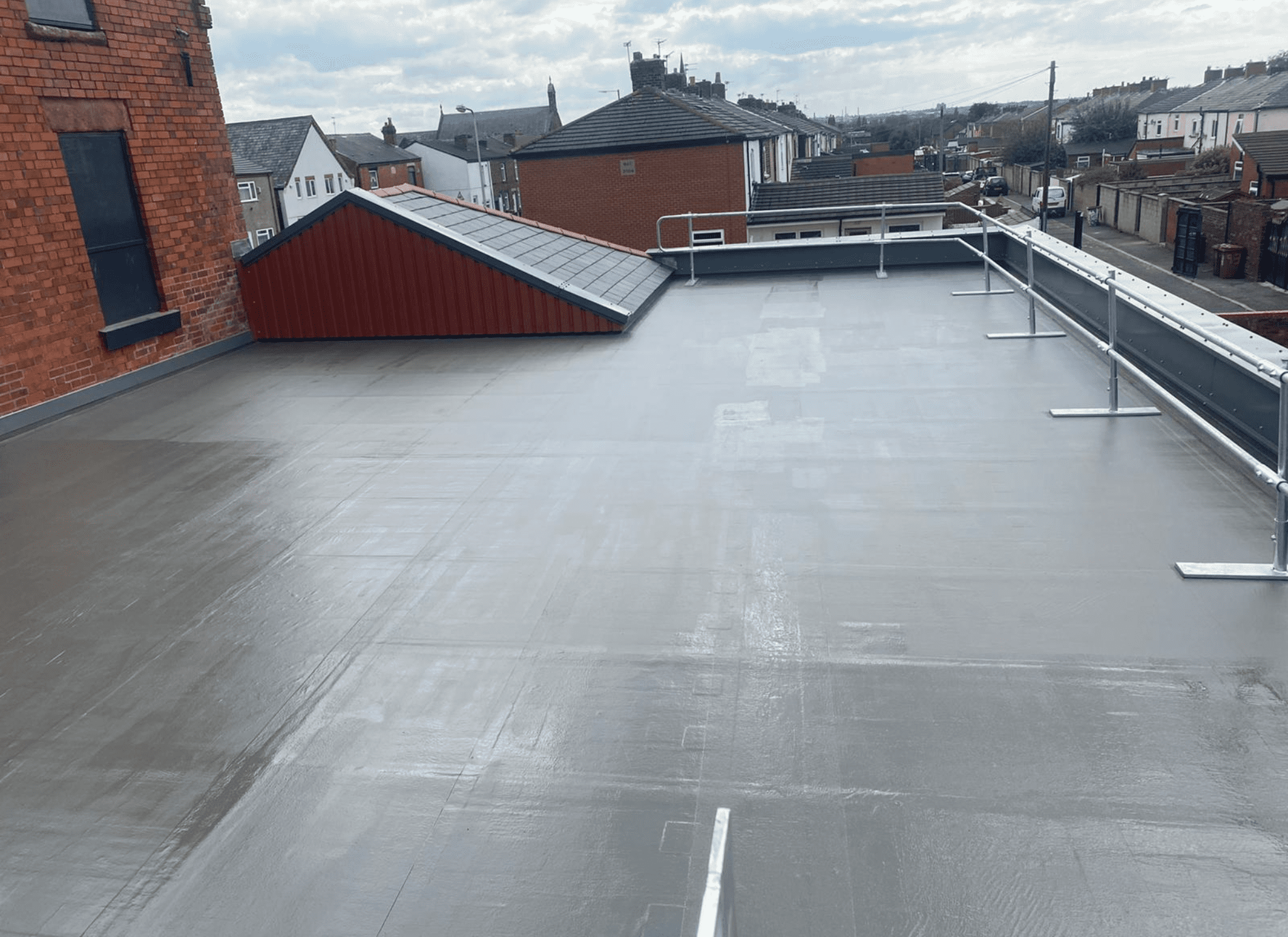
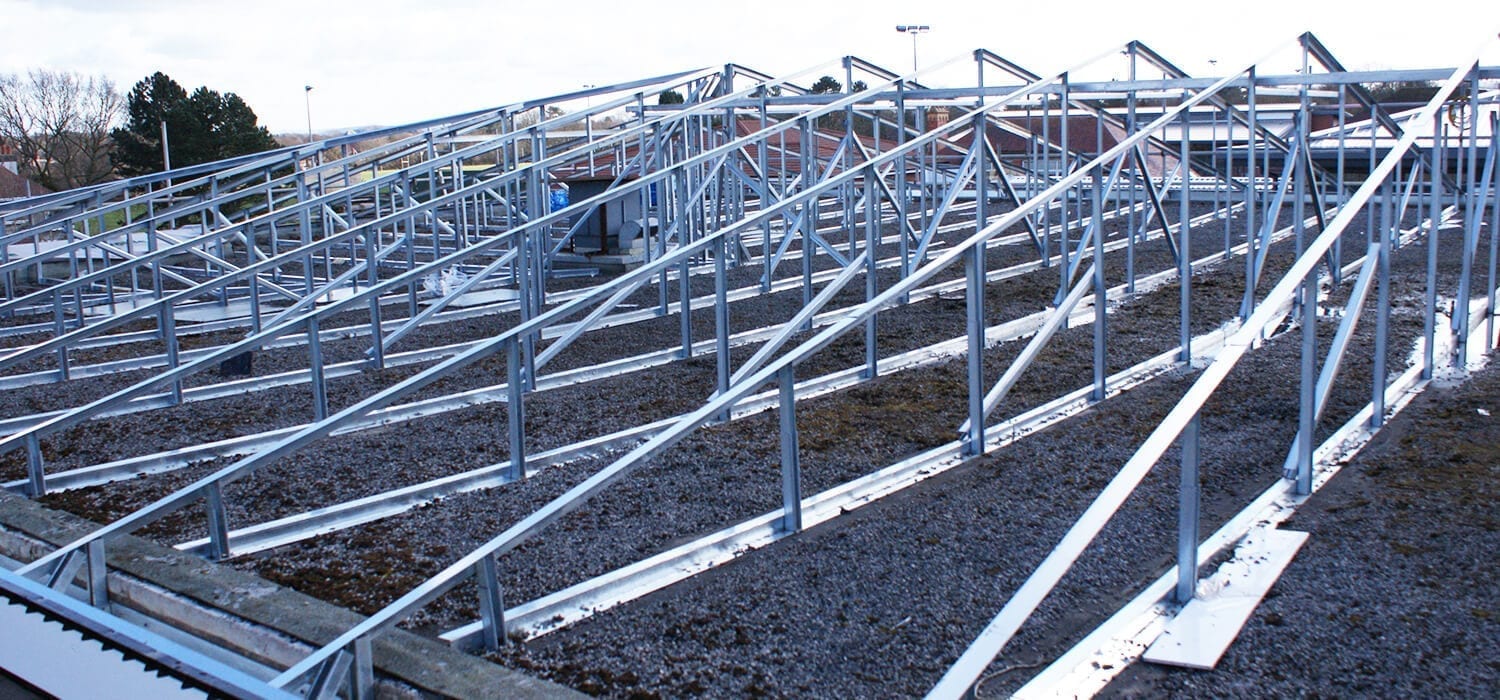

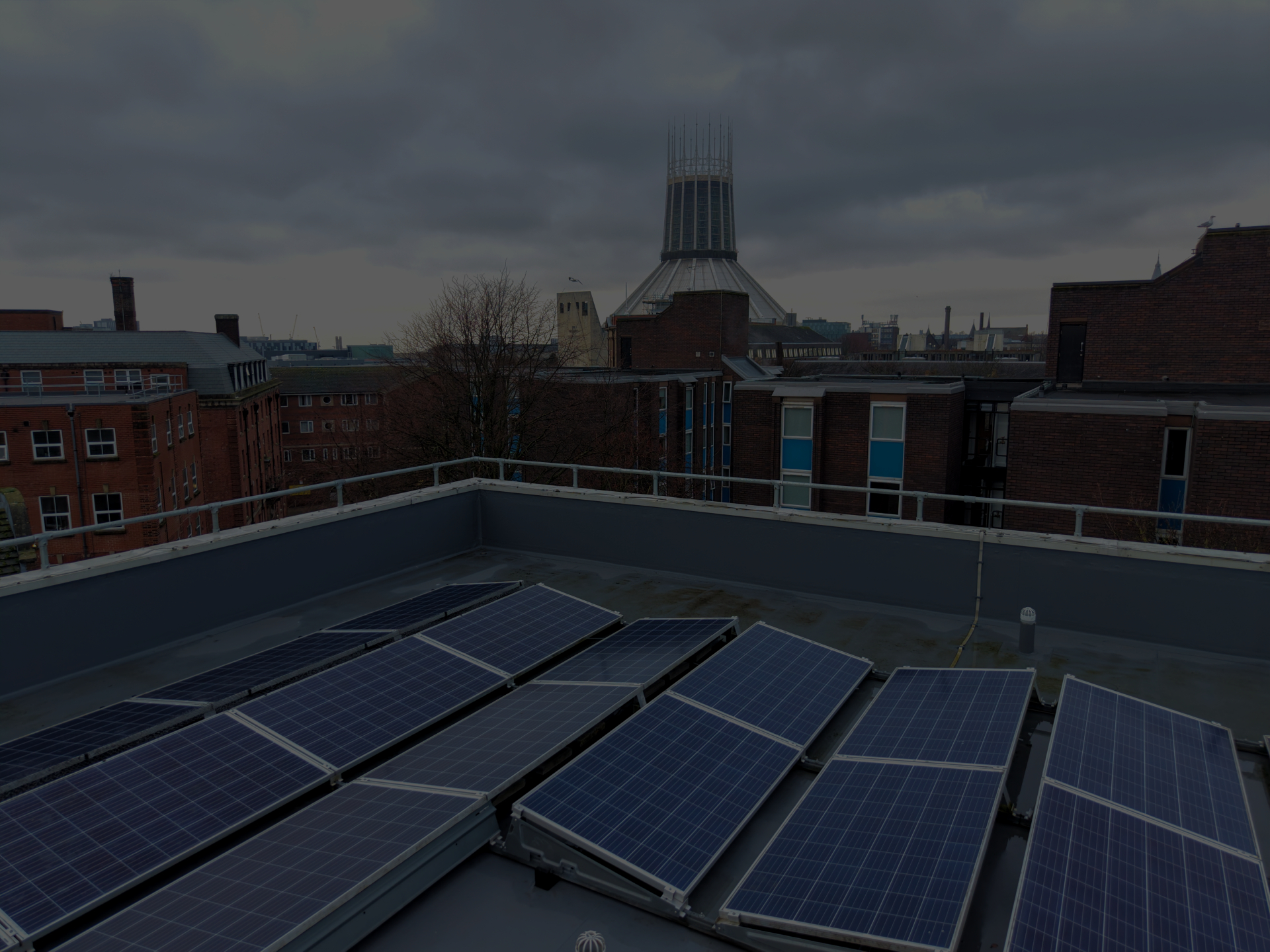
Unite Students’ Cedar House in Liverpool City underwent a roof refurbishment by Weatherproofing Advisors after water ingress was identified within multiple areas of the structure. A survey confirmed that the existing roof build-up was no longer performing as required despite good, serviceable solar photovoltaic panels and needed to be replaced with a long-term waterproofing solution.
As the building remained occupied throughout the works, careful planning was essential to minimise disruption to students while maintaining safe access to the building, bin stores and fire escape routes. A secure site compound was established following a thorough assessment of roof access and edge protection arrangements. The solar photovoltaic panels were removed and serviced by WPA’s in-house Energy Division prior to works. A replacement roof was then defined in sections, with temporary weather seals implemented to safeguard internal spaces.
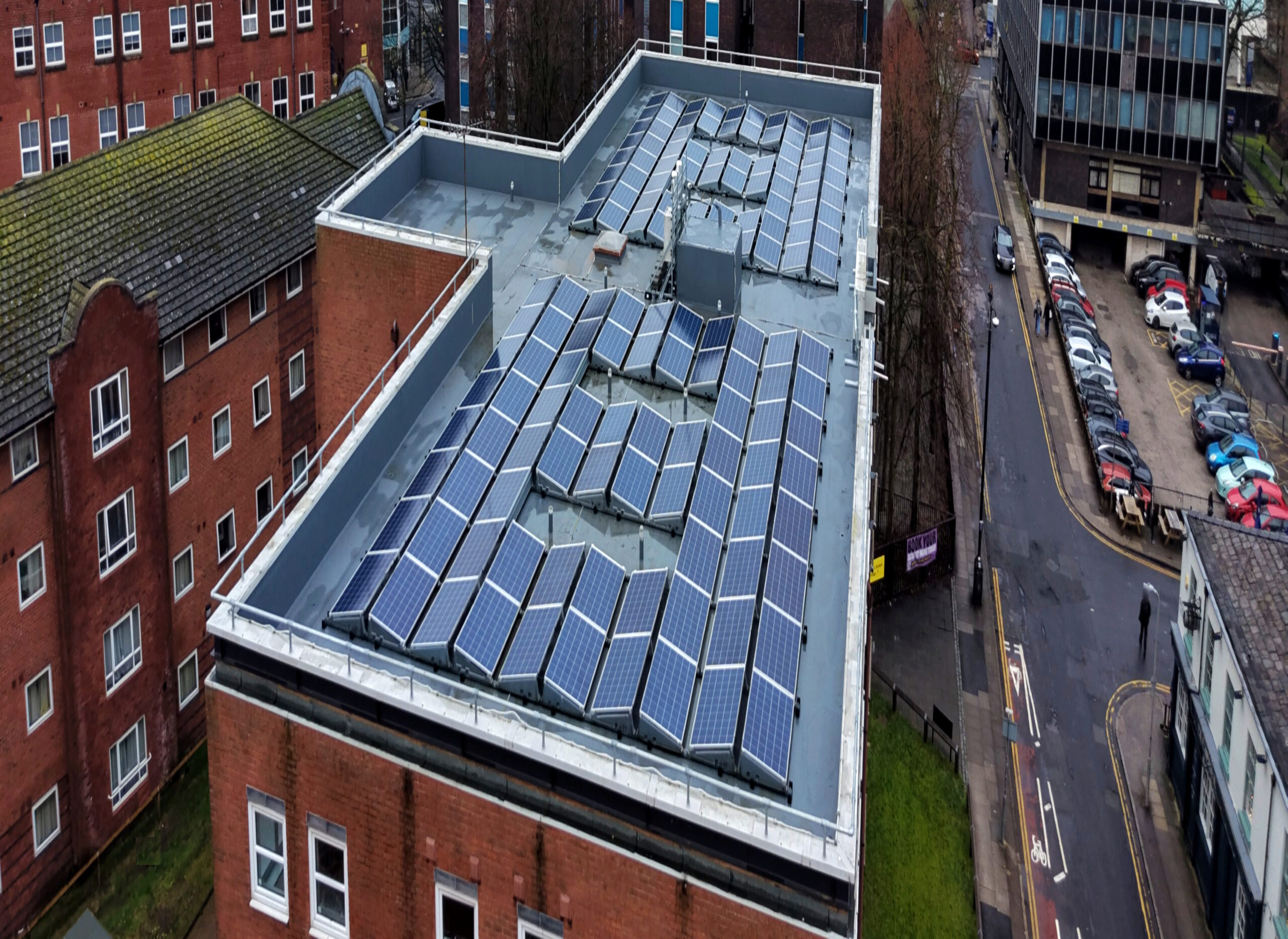
Completed works on the solar photovoltaic included protective end caps and deterrent netting, preventing the system from future damage. Disruptions were kept to a minimum by executing the works during agreed time period, and progress was communicated clearly to site management and residents. This project resolved the water ingress issues and delivered a durable, watertight roof. Finally, solar photovoltaic energy panels were re-installed and brought back into use, providing a safe, renewable energy source.
Weatherproofing Advisors were successfully appointed to inspect the condition of the roof covering at Unite Students - Cedar House.
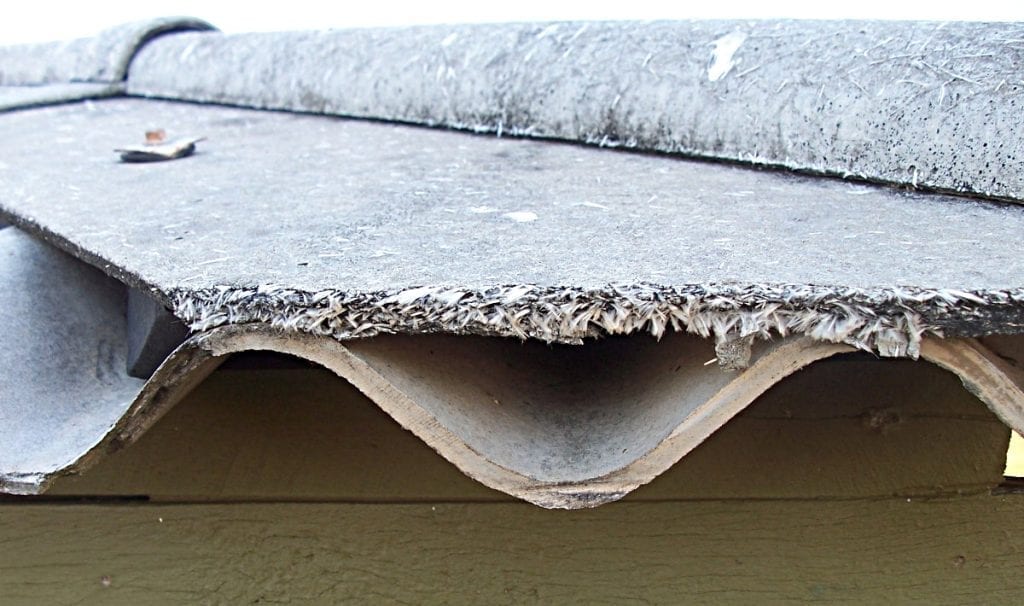
The site is located in Liverpool City centre within the USV development, which comprises seven separate student accommodation buildings. Constructed in 2002, the roof of Cedar House is original to the building and, following inspection, was found to be at the end of its serviceable life. Several areas of the building were experiencing water ingress, resulting in disruption to students.
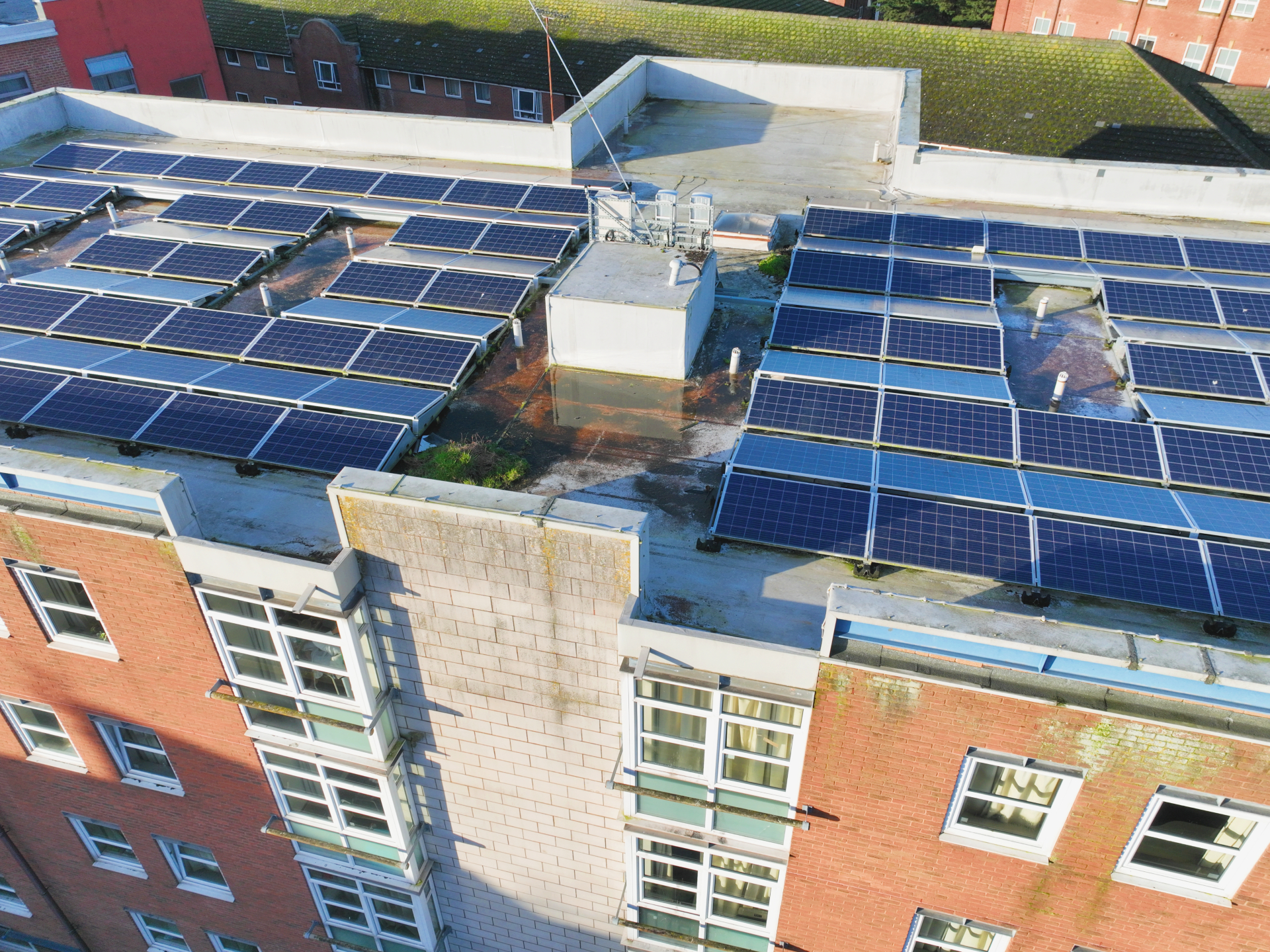
The existing solar photovoltaic system, installed approximately six years ago, remained in good serviceable condition at the time of inspection. As such, the project scope included the temporary removal of the system for the duration of the roof works, followed by its full re-instatement upon completion.
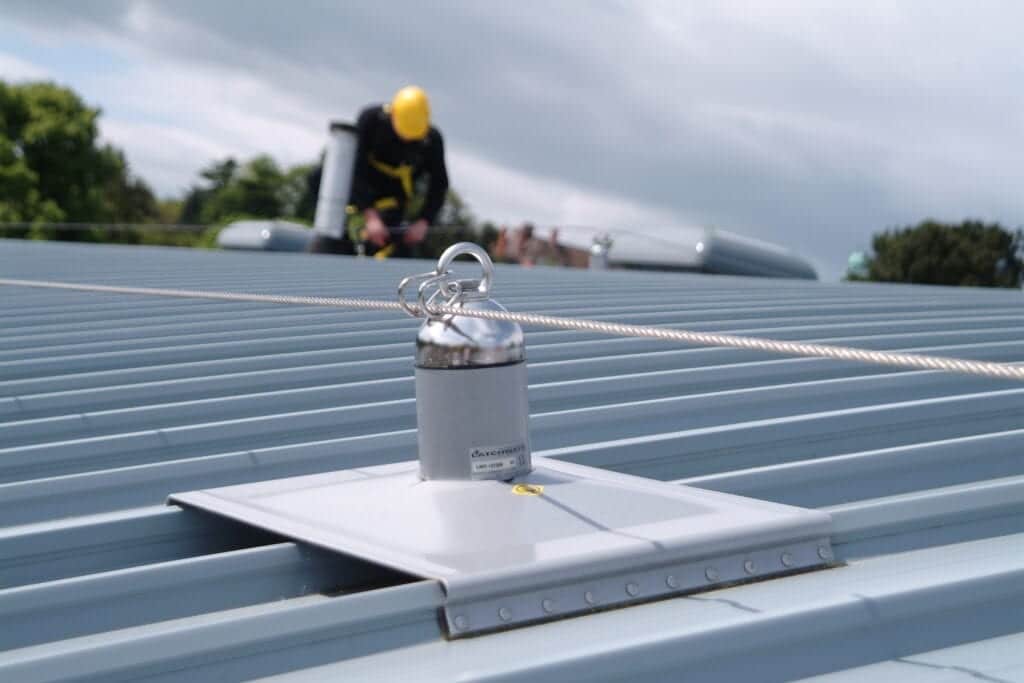
In addition, the project required an assessment of the existing roof access and edge protection arrangements. A permanent access and safety system was therefore specified and installed to enable safe ongoing maintenance of the new roof and servicing of the solar photovoltaic system.
Works were planned and programmed to minimise disruption to residents and the USV site. Given the location and occupation throughout the project, a coordinated phased approach was adopted with site management’s consultation.
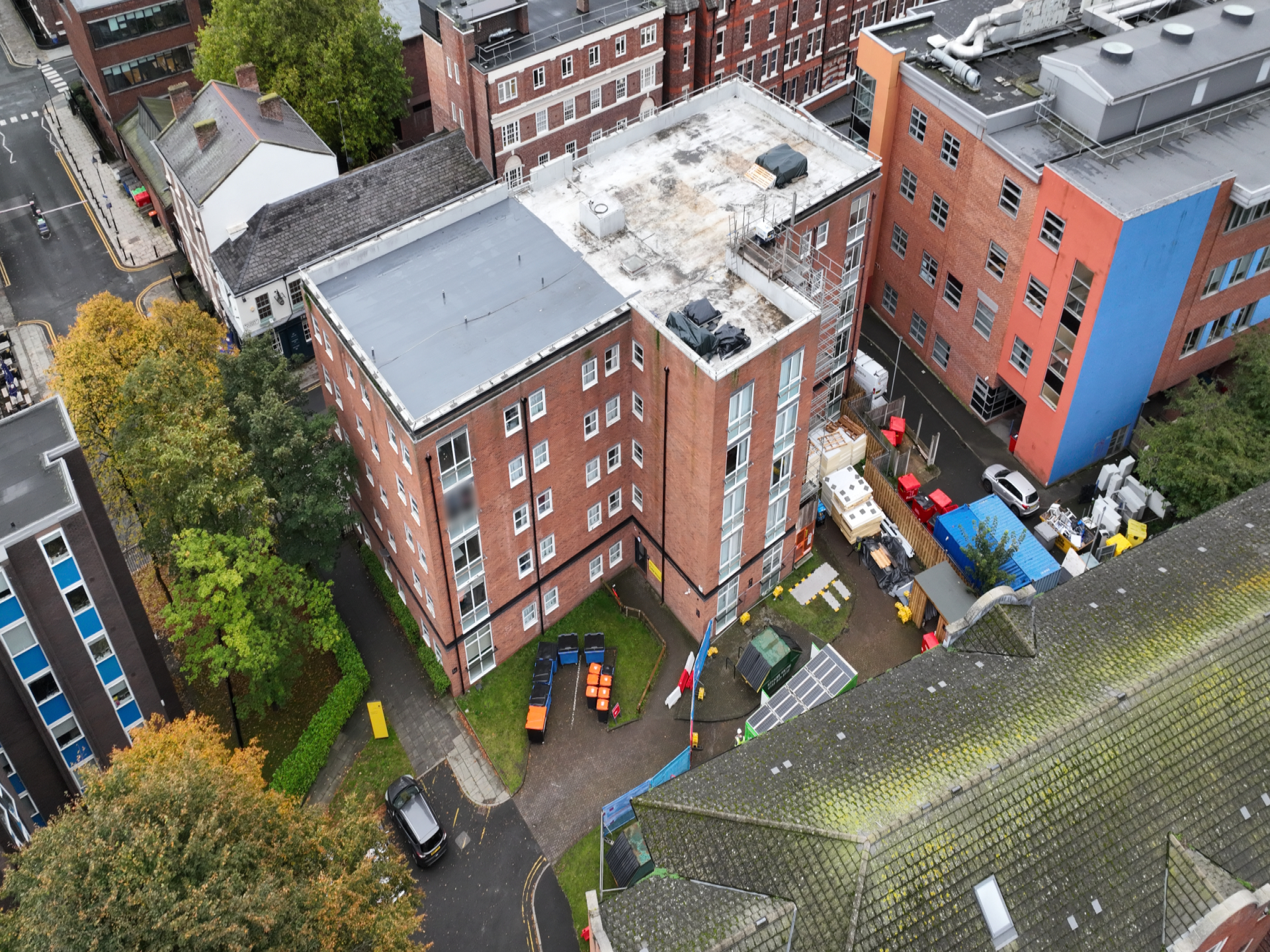
Roof replacement works were undertaken in defined sections, maintaining integrity of the building envelope and reducing risk of water ingress. Temporary weather seals were implemented to safeguard any internal spaces.
Removal and re-installation of the photovoltaic system was carried out by WPA’s in-house Energy Division, with panels stored securely on site. During removal, several components were identified as requiring replacement as part of the ongoing works. Protective end caps and bird deterrent netting were installed to prevent nesting and protect the system from future damage.
Access arrangements, deliveries and waste removal were managed to limit disturbances. Disruptive activities were scheduled during agreed time periods, and clear communication was maintained with site management and residents throughout the project.
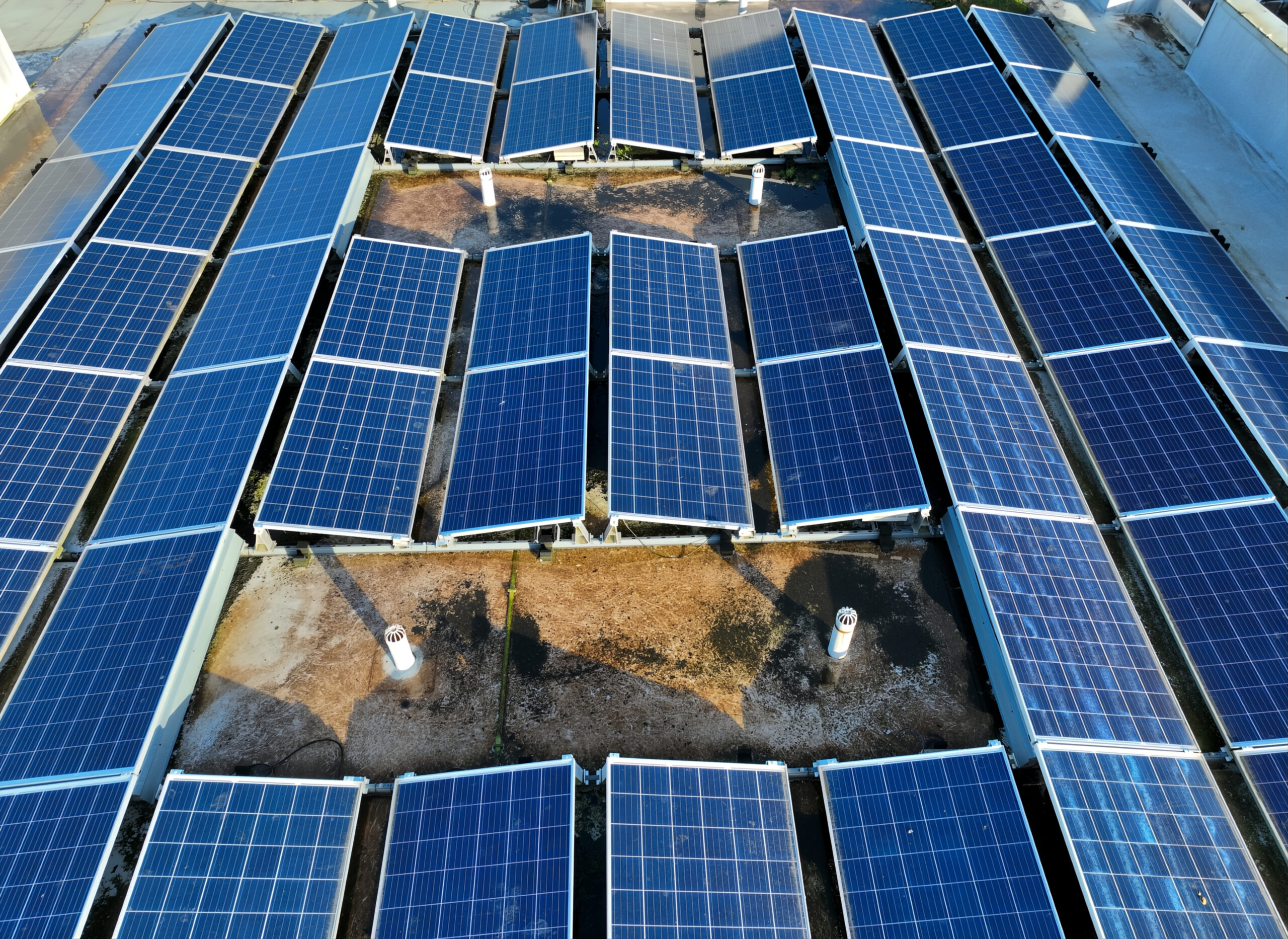
Original roof with exposed ends
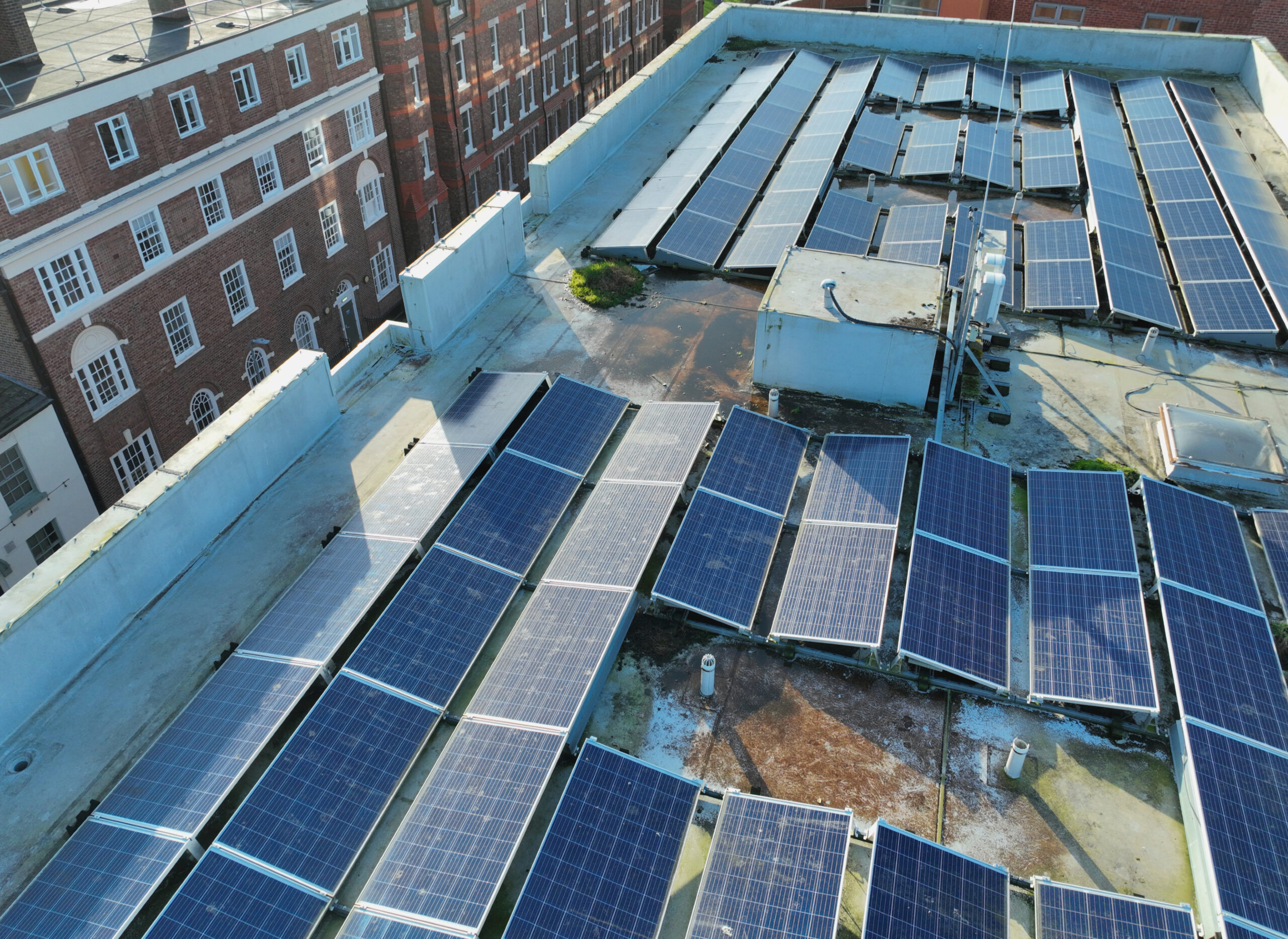
Insufficient parapet height, open leading edges
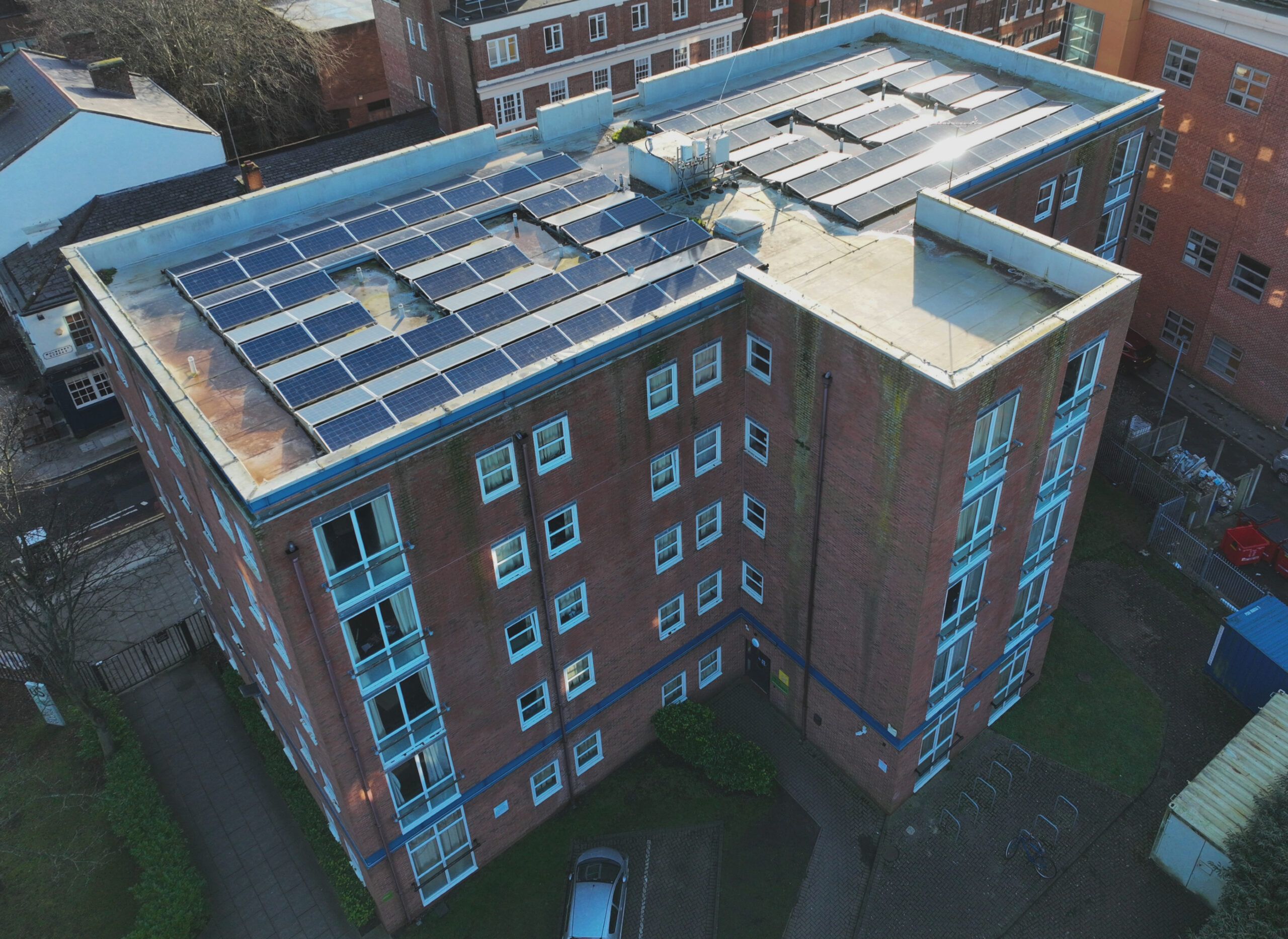
Overview of solar photovoltaic system
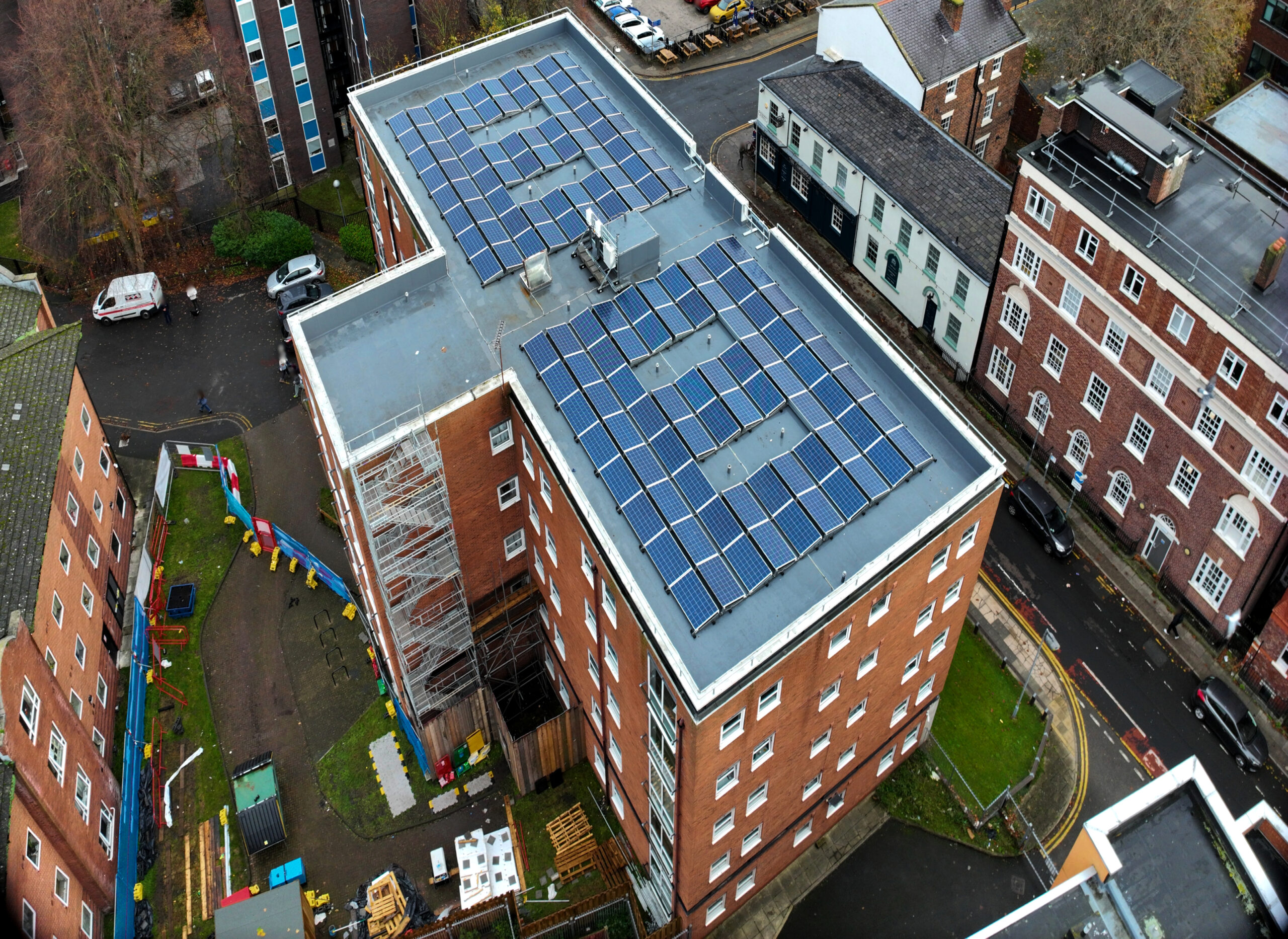
Solar panels reinstated
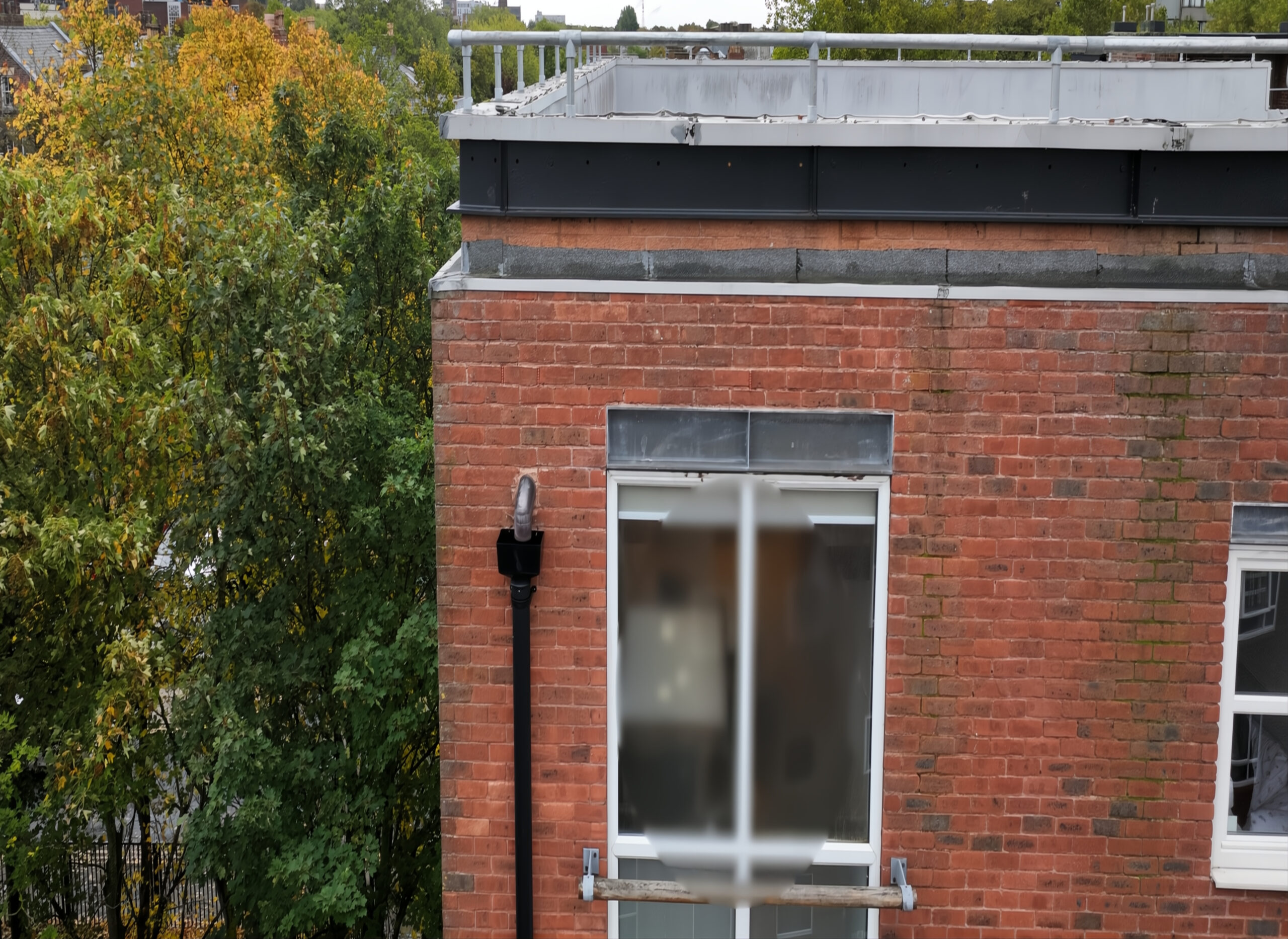
Permanent rail installed to increase parapet height
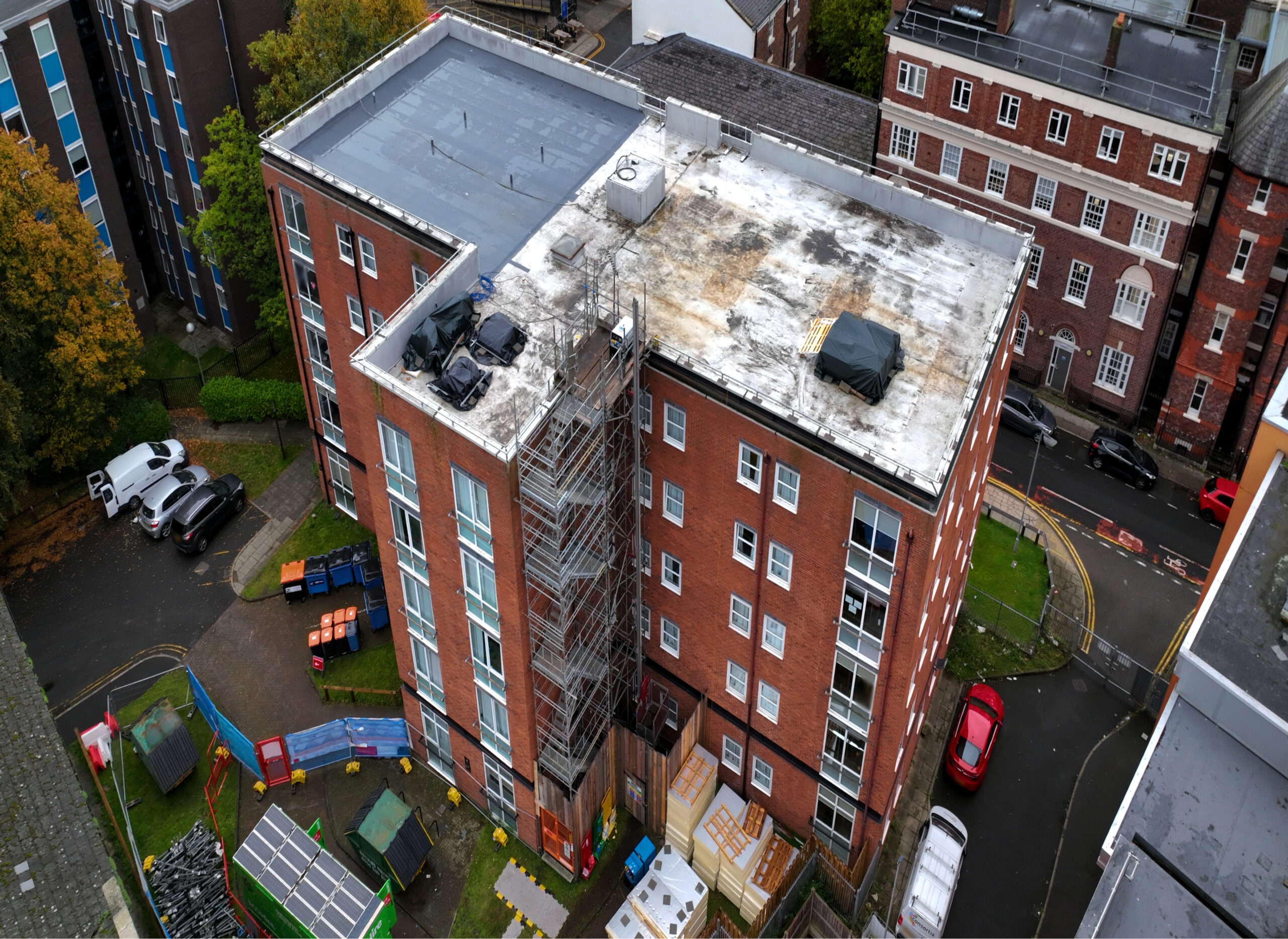
Works in progress
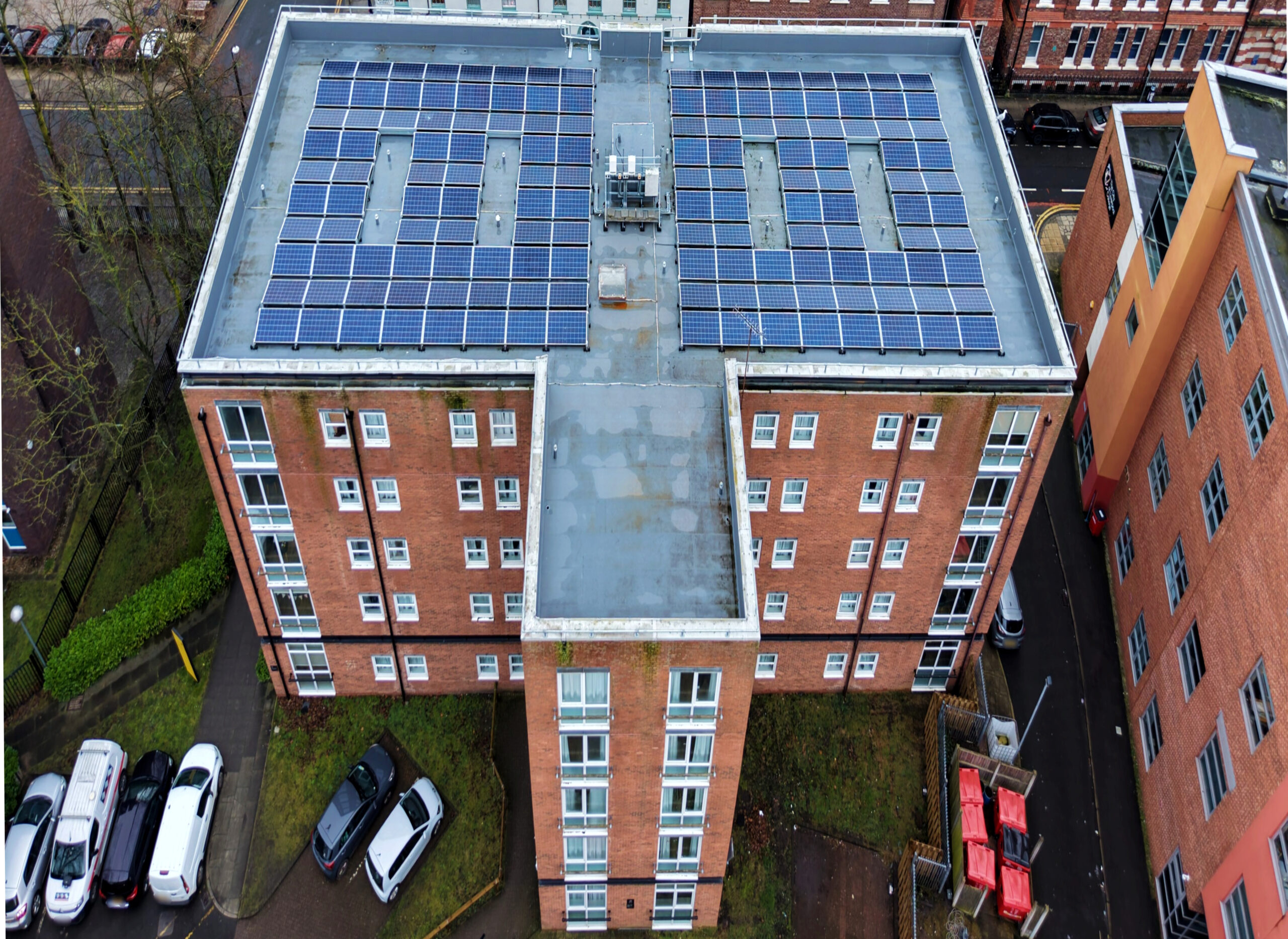
Completion overview
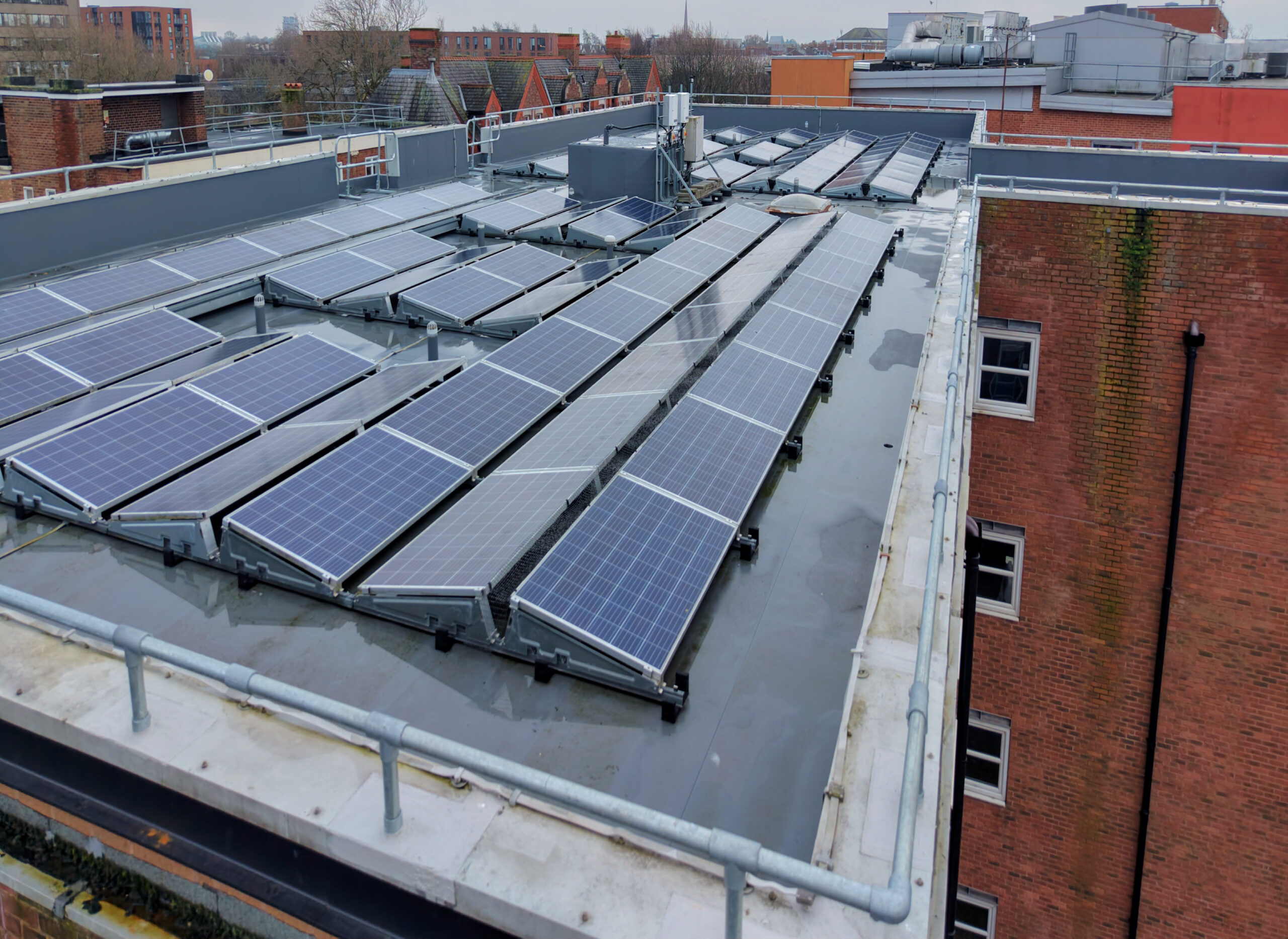
Solar panels with end caps and netting
Completion overview
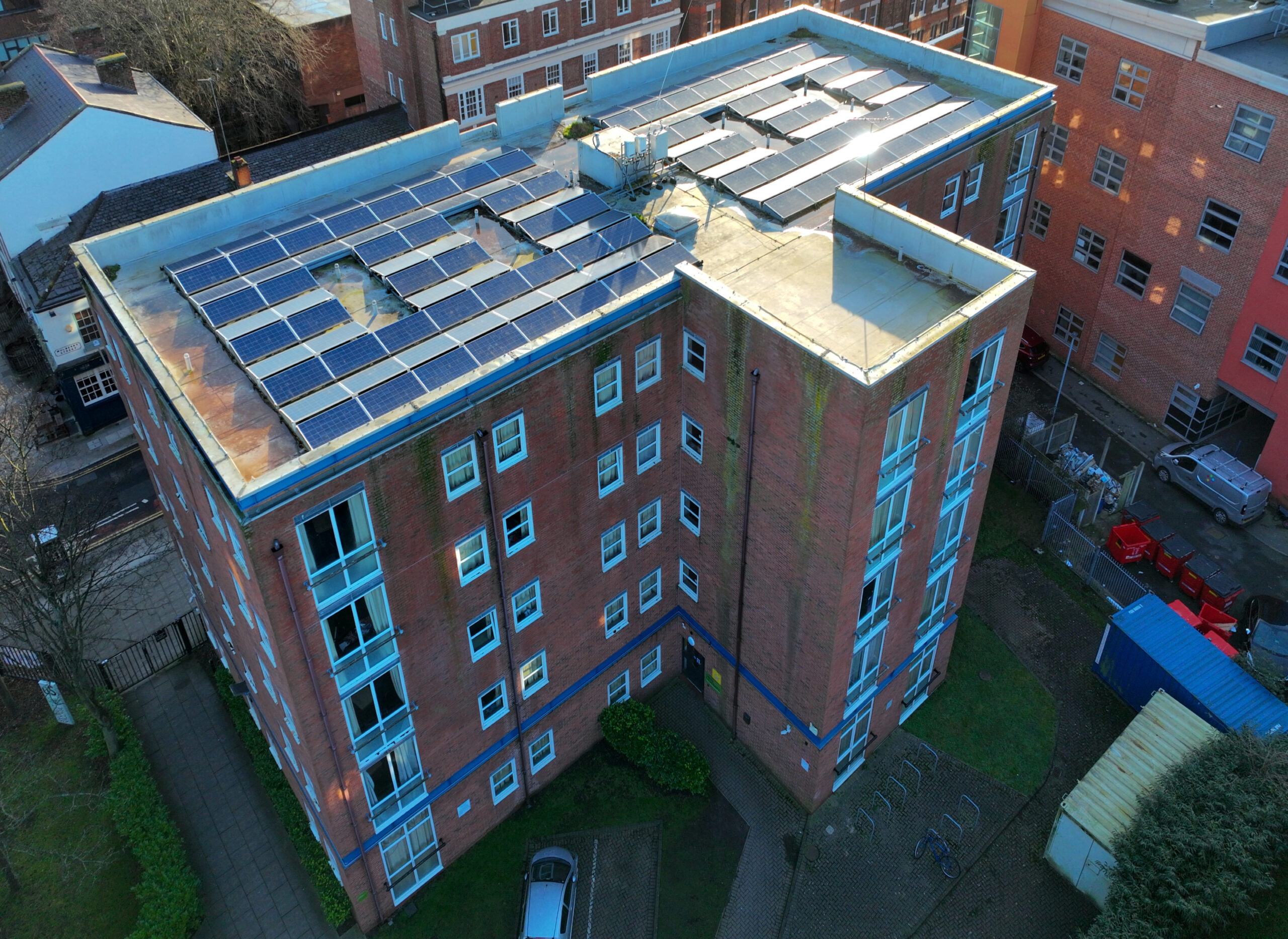
Overview (before)
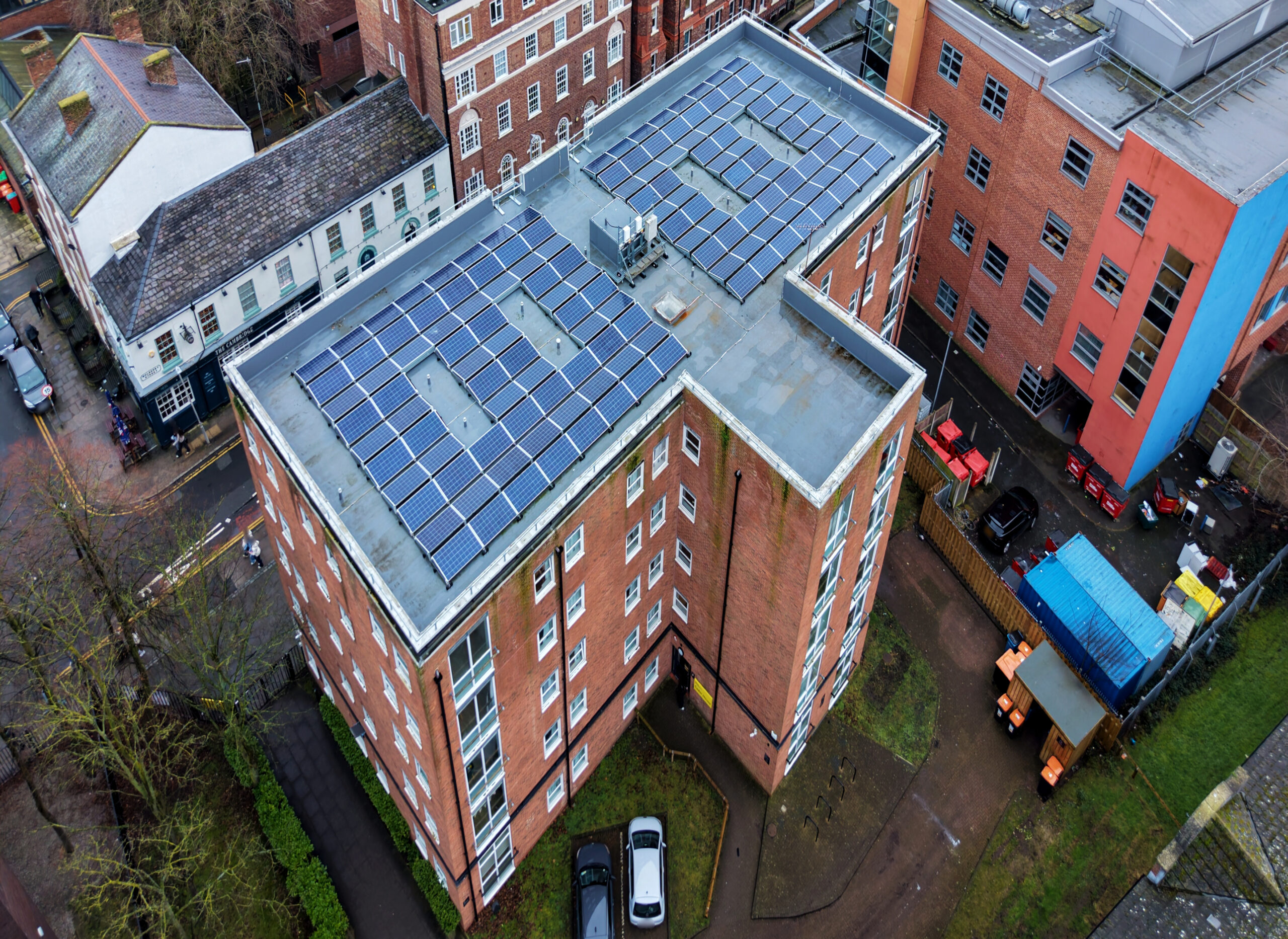
Overview (after)